Monday, October 11, 2010

Artifact 9: Student's Choice: Surgery - Victorian Times

 
REFLECTION
1.      a) Which main topic does the artifact relate to? In what ways?
This video relates to human health. It showed about how were the surgeries like, and how it worked in the Victorian Era. Which also means about the study of human body, anatomy in England during the 1800s.
2.       b) Which other main topics does it also relate to?
it also relates to Evolution of Science. 
3.      2. Why did you choose this artifact, and how much time did you spend creating and/or processing it?
I choose this artifact because it was interesting and something most people are would take a peek at it. It was cool but disgusting to see how the surgeon tools were used at that time. 
It took a while to find a great video like this on youtube and spent quite a bit of thinking about this.
4.      3. What insights and understanding have you gained from the creation and/or processing of this artif
act?
I learned about how people-doctors- thought about ways to cure the human body in the 1800s.They had created tools that are still used nowadays in modern surgeries. Also about how infections and diseases spread allover England that reached the top toll.

5.      4. Does this artifact reflect your best work and/or ideas? Why, or why not?
i think i did O.K on this artifact. I was so happy  when i found a excellent video precisely and clearly talking about medical stuff.

5. Rate this artifact on a scale of -5 to 5(0 is neutral) for the following 4 criterion:
    a) Impact on the quality of your Portfolio
3

    b) Impact on your level of happiness/enjoyment
4

    c) Impact on your learning
4

    d) Level of creativity and originality
1

6. Any additional comments.

Sunday, October 10, 2010

Artifact 8: J.M.W. Turner video

Great Artists:  J.M.W Turner
Check this out. This excellent  video explains about the life of the one of greatest artists in British history, J.M.W Turner.


Reflections:

1.          Which main topic does the artifact relate to? In what ways?
2.          Which other main topics does it also relate to?
3.          Why did you choose this artifact, and how much time did you spend creating and/or processing it?
4.          What insights and understanding have you gained from the creation and/or processing of this artifact?
5.          Does this artifact reflect your best work and/or ideas? Why, or why not?
6.          . Rate this artifact on a scale of -5 to 5(0 is neutral) for the following 4 criterion:
a)      Impact on the quality of your Portfolio
b)      Impact on your level of happiness/enjoyment
c)       Impact on your learning
d)      Level of creativity and originality
6. Any additional comments.

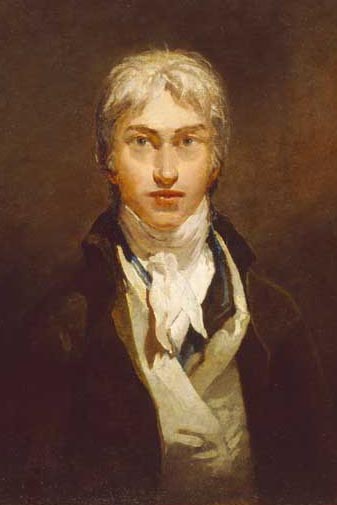
Artifact 7: influential Artist: Turner

                                  Rain, Steam and Speed - The Great Western Railway (1844 ), oil on canvas
                                  By J. M.W Turner (1775- 1851)


J.M.W Turner


"Joseph Mallord William Turner, the son of a barber and wigmaker, was born in London in 1775. As a child Turner made money by colouring engravings for his father's customers. At the age of 14 he entered the Royal Academy. He exhibited his first drawing, A View of the Archbishop's Palace in Lambeth in 1790. Two years later he providing illustrations for theCopperplate Magazine and the Pocket Magazine.

In 1792 Turner went on his first sketching tour. Most of his pictures during this period were cathedrals, abbeys, bridges and towns but in 1796 he became interested in painting pictures of the sea. He also began touring with his artist friend,
Thomas Girton.

By 1800 Turner was acknowledged as one of Britain's leading topographical watercolourist. He received several commissions to illustrate books. His artistic ability was recognised when he was elected an associate of the Royal Academy.

In 1803 Turner's style changed. His impressionistic 
Calais Pier was criticised as being unfinished. For the next few years he was attacked by the critics and he had difficulty selling his paintings. One critic called Turner's landscapes "pictures of nothing, and very alike." Turner had his supporters, including John Ruskin, who described his paintings as "true, beautiful and intellectual". 

In 1844 Turner turned his attention to railways and painted 
Rain, Steam and Speed - The Great Western Railway. J. M. W. Turner died at his cottage in Chelsea in 1851. He left some three hundred paintings and nineteen thousand watercolours to the nation."-------------------- -
http://www.spartacus.schoolnet.co.uk
*Check web at http://www.spartacus.schoolnet.co.uk/RAturner.htm


Reflection:


1.      a) Which main topic does the artifact relate to? In what ways?

2.       b) Which other main topics does it also relate to?

3.      2. Why did you choose this artifact, and how much time did you spend creating and/or processing it?

4.      3. What insights and understanding have you gained from the creation and/or processing of this artif
act?

5.      4. Does this artifact reflect your best work and/or ideas? Why, or why not?

5. Rate this artifact on a scale of -5 to 5(0 is neutral) for the following 4 criterion:
    a) Impact on the quality of your Portfolio

    b) Impact on your level of happiness/enjoyment

    c) Impact on your learning

    d) Level of creativity and originality

6. Any additional comments.

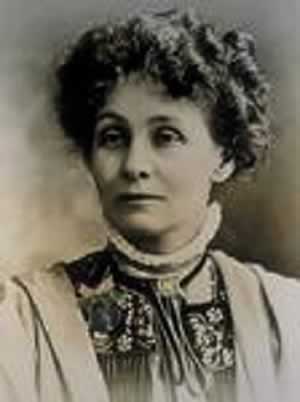
Artifact 4: Biological Spotlight: Emmeline Pankhurst

Emmeline Pankhurst


Emmeline Pankhurst was born in Manchester, England in 1858 and daughter of Robert Gouldren and Sophia Crane. Emmeline Pankhurst is one of most important and significant British women in history during the 19th century. As a British political activist, she is known for her headstrong, persistent leadership in the British women suffragette movement. Her childhood was consists of many political scenes, due to her parent’s interest (esp. her mother, Sophia, who supports women’s many rights) in running campaigns against slavery and the corn laws. Emmeline attended her first women’s suffrage meeting in 1872, hosted by veteran campaigner, Lydia Becker. Few years after graduating from her finishing school in Paris, becoming a svelte lady, Emmeline met Richard Pinehurst, who is a lawyer, committed socialist and also one strong advocate of women’s suffrage. After being married to each other, they decided to form and join rebel groups supporting women’s right to vote, fro example, they created The Independent Labor Party. She gave birth to four children: Christabel Pankhurst (1880), Sylvia Pankhurst (1882), Frank (1884) and Adela Pankhurst (1885). In 1886, she joined the Matchgirls Strike. In 1903, Emmeline got involved with Christabal Pankhurst, Sylia Pankhurst and Adela Pankhurst to establish the Women’s Social and Political Union (WSPU). Her intention to form party was to recruit working class women into the struggle for the vote. The organization became infamous for its violent acts in an attempt to win the vote. Many of the activists were sent to prison and suffered hunger strikes, in attempt to be released. In 1917 Emmeline and Christabel Pankhurst founded the Women’s Party., for its goal was to : “ (1) A fight to the finish with Germany. (2) More vigorous war measures to include drastic food rationing, more communal kitchens to reduce waste, and the closing down of nonessential industries to release labour for work on the land and in the factories. (3) A clean sweep of all officials of enemy blood or connections from Government departments. Stringent peace terms to include the dismemberment of the Hapsburg Empire." They also profoundly supported "equal pay for equal work, equal marriage and divorce laws, the same rights over children for both parents, equality of rights and opportunities in public service, and a system of maternity benefits." After the WW1, 1928, at last, Emmeline passed away on 14th of June in Hampstead.


Reflections


1.          Which main topic does the artifact relate to? In what ways?
2.          Which other main topics does it also relate to?
3.          Why did you choose this artifact, and how much time did you spend creating and/or processing it?
4.          What insights and understanding have you gained from the creation and/or processing of this artifact?
5.          Does this artifact reflect your best work and/or ideas? Why, or why not?
6.          . Rate this artifact on a scale of -5 to 5(0 is neutral) for the following 4 criterion:
a)      Impact on the quality of your Portfolio
b)      Impact on your level of happiness/enjoyment
c)       Impact on your learning
d)      Level of creativity and originality
6. Any additional comments.

Artifact 3: the Luddites -Headline news

The Luddites – Headline news. 1812
------ Luddites have been roaming and invading thy streets and everywhere. Owner of textile factories have been extremely distressed by the rebel acts of the intruders. Luddities have grown with countless riots since thy time when textile machines were launched and owners began to replace men by thy machines. For almost every late night, or month, the Luddites broke into textile factories, destroying and smashing machines into pieces, yet causing turmoil to thy occupied minds of business owners and thy government. On thy command of owners, thy government had sent many armed men to secure a tight security around the factories. Ever since then, many culprits of the incidents were caught and strangled tight without a gap to escape. A similar incident had occurred on January, where three Luddities, one of them named George Mellor, were caught and executed for a committing a murder on a textile factory owner surnamed Horsfall, who owned Ottiwell Mill. After then, many others were executed and shipped to Australia.
Reflections:
1.          Which main topic does the artifact relate to? In what ways?
2.          Which other main topics does it also relate to?
3.          Why did you choose this artifact, and how much time did you spend creating and/or processing it?
4.          What insights and understanding have you gained from the creation and/or processing of this artifact?
5.          Does this artifact reflect your best work and/or ideas? Why, or why not?
6.          . Rate this artifact on a scale of -5 to 5(0 is neutral) for the following 4 criterion:
a)      Impact on the quality of your Portfolio
b)      Impact on your level of happiness/enjoyment
c)       Impact on your learning
d)      Level of creativity and originality
6. Any additional comments.